
NazaraRestaurant Website
Branding / UI/UX Design

Project Details
Client:
Nazara Restaurant, Cary, NC
Services:
Re-design, UX/UI Design, Branding
Project Timeline:
2 months
Overview
Nazara is a well-regarded local restaurant in Cary, North Carolina, celebrated for its authentic North Indian, South Indian, and Tandoori cuisine. Recognizing the growing importance of online presence and direct ordering, Nazara aimed to enhance its digital platform. This project focused on redesigning their existing website to achieve two primary objectives: significantly increase the online ordering rate and improve the overall user experience when accessing and navigating the menu.
The Challenge
Nazara’s previous website, while responsive and appearing modern, presented usability challenges. Feedback from both the client and their customers indicated that the site was not particularly user-friendly. Key pain points included:
- Excessive Navigation: Users encountered too many clicks to explore the website’s content, leading to frustration and potential drop-offs.
- Low Online Ordering Prominence: The option to order food online was not easily discoverable, resulting in a modest online sales rate of only 15% of their total revenue.
- Unintuitive Menu Listing: The presentation of the menu made it difficult for users to browse and understand the diverse offerings.
These challenges highlighted a need for a user-centered redesign to streamline the online experience and drive online sales.
The primary goals of this website redesign were:
- Increase Online Ordering Rate: Elevate the percentage of total sales generated through online orders.
- Enhance Menu Accessibility: Improve the ease with which users can find, view, and understand the restaurant’s menu.
- Improve Overall User Experience: Create a more intuitive, efficient, and visually appealing online experience for Nazara’s customers.
The Approach
To address the identified challenges and achieve the project goals, a user-centered design approach was employed:
1. User / Stakeholder Interviews:
The initial phase involved gathering valuable insights directly from those most impacted by the website:
- Client Interview: A detailed discussion with the restaurant owner and potentially staff members was conducted to understand their business objectives, brand identity, operational needs related to online ordering, and their perspectives on the existing website’s shortcomings.
- Customer Feedback: Informal conversations or feedback collection methods (if available) were used to understand customer pain points, preferences, and expectations regarding a restaurant website, particularly concerning menu browsing and online ordering.
Key Findings from Interviews:
- Confirmation that the online ordering option was not easily noticeable.
- Feedback suggesting the menu structure or presentation was confusing or cumbersome to navigate.
- A desire for a more visually appealing and modern online representation of the restaurant’s brand.
2. Sketching & Ideation:
Based on the insights gathered, the design process moved into the ideation phase. This involved exploring various layout and feature options through sketching:
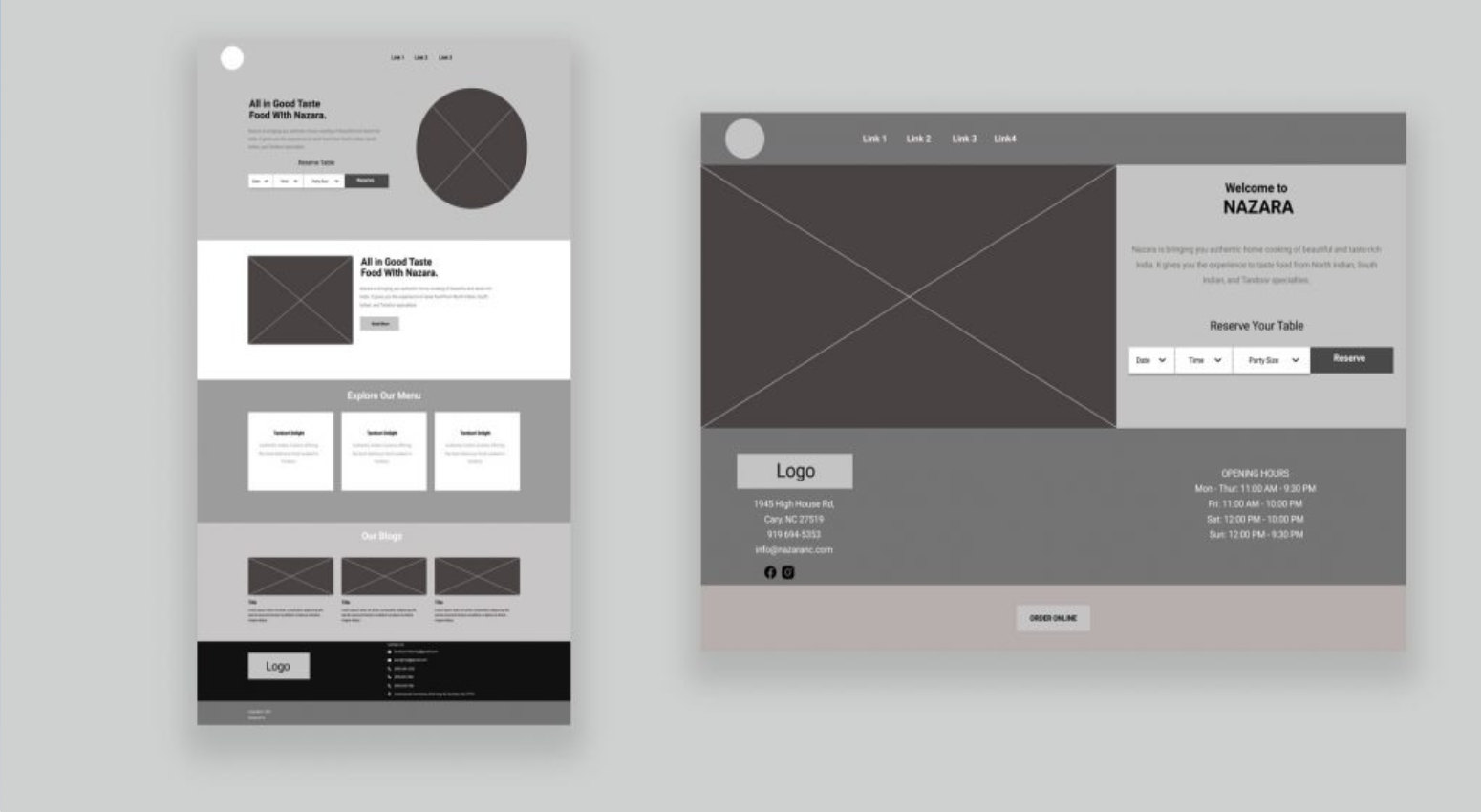
- Multiple Concepts: Two distinct design options were developed, each addressing the identified challenges in different ways. These likely explored variations in navigation structure, placement of key elements like the “Order Online” button, and menu presentation styles.
- Focus on Key Actions: A central focus was placed on making the online ordering process more prominent and accessible. Ideas likely included strategically positioning a clear call-to-action button and potentially incorporating it into the persistent navigation.
- Menu Design Exploration: Different ways of presenting the menu were explored, considering factors like categorization, visual hierarchy, use of images, and ease of reading on various devices.
3. Client Presentation and Selection:
The two design options, likely presented as wireframes or low-fidelity mockups, were shared with the client. This allowed the client to visualize the proposed changes and provide feedback. The client then selected the design direction that best aligned with their vision and business goals.
4. Detailed UI Design and Development Preparation:
Once the layout was chosen, the focus shifted to creating the visual design and preparing for development:
- Visual Design: This involved defining the website’s aesthetic, incorporating Nazara’s branding elements (colors, typography, imagery), and creating high-fidelity mockups of key pages, including the homepage, menu pages, and online ordering flow. The goal was to create a visually appealing and modern look and feel that reflected the quality of the restaurant’s cuisine.
- UI Design: Attention was paid to the user interface elements, ensuring they were intuitive, consistent, and optimized for usability. This included the design of buttons, forms, navigation menus, and other interactive components.
The Result
The redesigned Nazara Restaurant website went live in 2019 and achieved significant positive outcomes:
- Significant Increase in Online Sales: The online sales rate surged from 15% to 40% of total sales. This dramatic increase can be directly attributed to the prominent and always-visible “Order Online” button (likely implemented as a sticky element), making it effortless for users to initiate an order.
- Positive User Feedback: The client and users alike provided positive feedback on the updated website. Users specifically appreciated the improved menu presentation, making it easier to explore the diverse culinary offerings.
- Enhanced Visual Appeal: The new look and feel of the website was well-received, contributing to a more positive perception of the restaurant’s brand and overall online experience.
Lesson Learned
This case study highlights the significant impact of user-centered design on achieving business goals. Key takeaways include:
- The Importance of User Research: Understanding user needs and pain points through interviews and feedback is crucial for identifying areas for improvement and informing design decisions.
- Strategic Placement of Key Actions: Making important functionalities like online ordering highly visible and easily accessible can directly drive desired user behavior.
- Intuitive Information Architecture: A well-structured and easy-to-navigate menu is essential for restaurants to effectively showcase their offerings and encourage orders.
- The Value of Visual Design: A modern and appealing visual design enhances user trust and contributes to a positive brand perception.
Conclusion
The redesign of Nazara Restaurant's website demonstrates the power of a focused UX approach in addressing specific business challenges. By prioritizing user needs and strategically implementing design solutions, the project successfully increased online sales, improved menu accessibility, and enhanced the overall online experience for Nazara's customers. This case study serves as a testament to the value of user-centered design in achieving tangible business results for local businesses.
